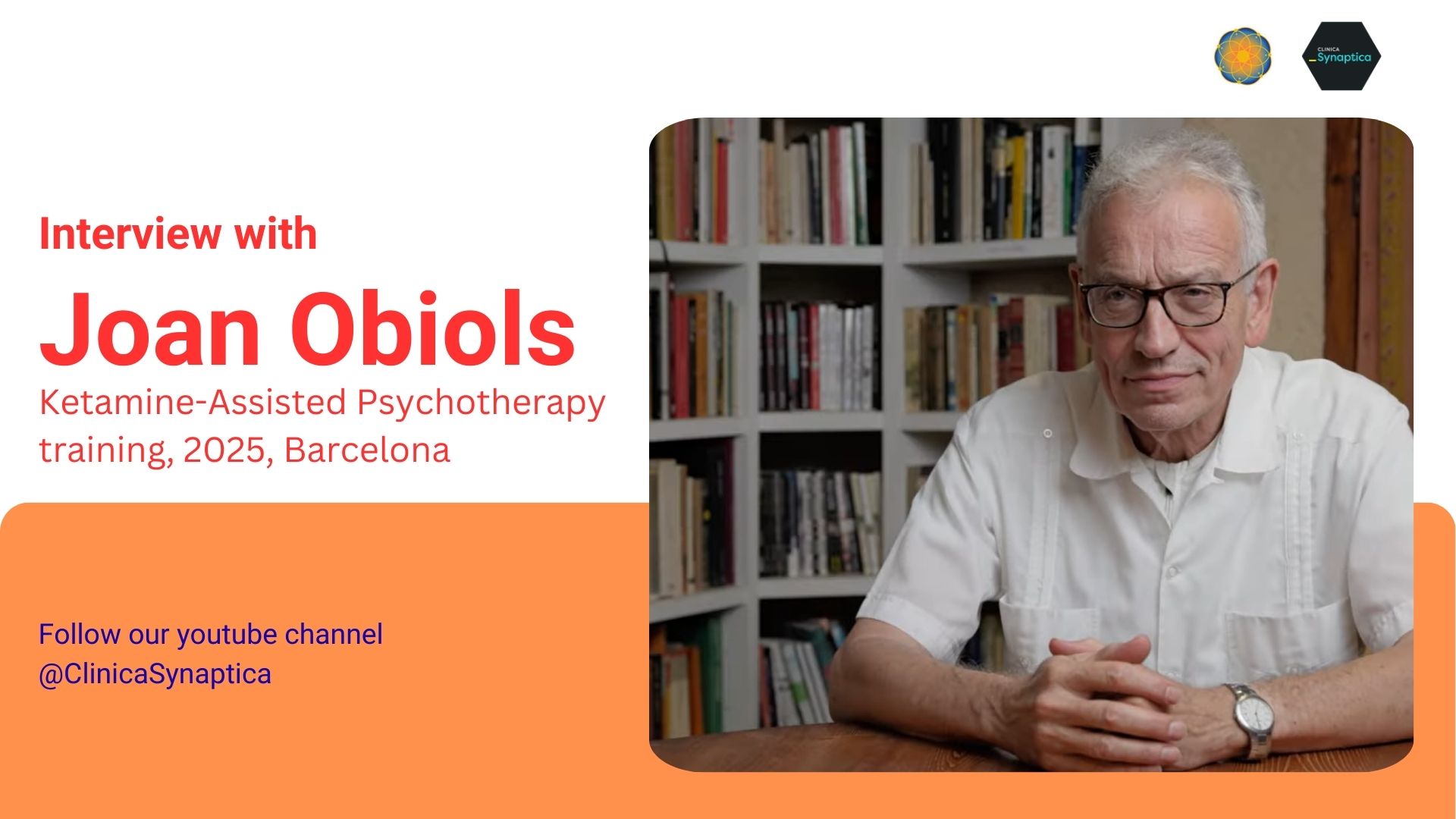

Watch the interview with Dr. Joan Obiols here
Joan Obiols Llandrich was born in Barcelona in 1951. His father, Joan Obiols i Vié, was a leading figure in Catalan cultural circles, leaving an indelible mark as a doctor and psychiatrist. As the namesake and successor to this legacy, Joan has been practicing psychiatry for more than 50 years, with a cross-cultural perspective that makes him a unique psychiatrist in this world. Joan integrates culture into his medical approach, seeking to understand and incorporate the patient’s own explanatory model into the treatment process, thereby creating a horizontality that is rare in the medical world. He is the author of dozens of articles and papers and has taught various courses and professional training programs. At Clinica Synaptica, we are honored and fortunate to have his wisdom and support as Medical Director and psychiatrist.
In this interview, Joan tells us about his journey into psychiatry and psychedelics, with his father always present behind his words. As the psychiatrist of Dali and other important figures of that era, his father was a person of great influence in his life. His great interest in culture and art nourished Joan in a profound and transcendental way, something he was unable to see in full detail until years later.
Following these giant strides, Joan has not been left behind. He has been a driving force and a leading figure in psychiatry in Catalonia, helping to create the first mental health units in the public health system and contributing to their evolution to date. His keen interest in culture led him to study anthropology as well, a degree that did not even officially exist at the time. His early years as a medical resident were marked by the legal and pharmaceutical use of LSD, which unfortunately was halted shortly thereafter due to the significant impact of its prohibition.
In recent years, Dr. Joan Obiols has worked at Clínica Synaptica using ketamine-assisted psychotherapy, and has personally witnessed the great therapeutic potential of this substance. He leaves behind a model for future generations of psychiatrists to follow, one of open-minded and broad-minded psychiatry, a person-centered approach that goes beyond biology and pharmaceuticals.If you would like to hear more from him, click here to watch the interview with Dr. Joan Obiols.