


A conversation with Dr. Joan Obiols
Dr. Joan Obiols shares his more than 50 years in psychiatry, marked by a transcultural perspective, his father’s legacy, and his experience with innovative therapies such as ketamine-assisted psychotherapy. It’s a journey through a person-centered approach to mental health, open to new perspectives.
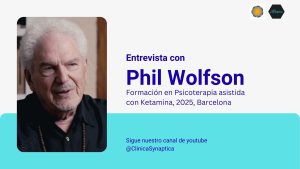
Phil Wolfson: an in-depth interview
In this engaging interview conducted by Dr. Joan Obiols, Phil Wolfson, founder of the Ketamine Research Foundation, speaks passionately about the pivotal events in his life and what led him to become a world-renowned expert in ketamine-assisted psychotherapy.
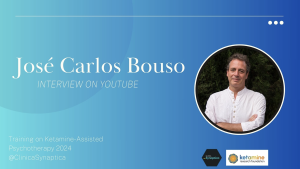

Interview with José Carlos Bouso
José Carlos Bouso, psychologist and PhD in Pharmacology, reflects on the present and future of psychedelic therapy in an interview recorded during a ketamine-assisted psychotherapy training in Barcelona. He reviews the historical importance of psychedelic research in psychiatry, addresses current regulatory and sociopolitical challenges, and discusses the influence of the pharmaceutical industry. Bouso also highlights his long-standing interest in schizophrenia and its potential responsiveness to psychedelic-assisted approaches, expressing strong optimism that we are entering a uniquely promising era for psychedelic medicine.
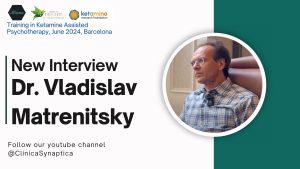
New interview with Dr. Vladislav Matrenitsky, kyiv, Ukraine
During our recent Ketamine-Assisted Psychotherapy training, we had the privilege of welcoming Vladislav Matrenitsky, founder of Expio Clinic in Kyiv. A medical doctor and transpersonal psychotherapist, Dr. Matrenitsky integrates psychedelic medicine with non-Western traditions such as Qigong and Sufism. Since 2018, he has worked therapeutically with ketamine, with a special focus on soldiers suffering from PTSD, contributing both to clinical care and to the growing body of research on ketamine-assisted therapy.
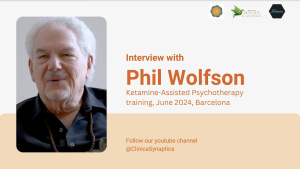
Phil Wolfson: ketamine, consciousness and emotional healing
Phil Wolfson, creator of Ketamine-Assisted Psychotherapy (KAP) and director of the Ketamine Research Foundation, shares an in-depth reflection on his life, clinical work, and the future of psychedelic medicine. In this interview, recorded during the 2024 KAP training in Barcelona, Wolfson discusses ketamine’s unique therapeutic flexibility, the risks of over-medicalization, and the importance of integrating psychotherapy with psychedelic treatments. He also offers a critical perspective on regulation, corporatization, and access in Europe.
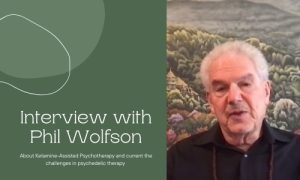
Interview with Phil Wolfson
Phil Wolfson, creator of Ketamine-Assisted Psychotherapy (KAP) and director of the Ketamine Research Foundation, shares his vision on the future of psychedelic psychotherapy in this in-depth interview. Drawing from decades of clinical practice and research, he reflects on ketamine’s unique therapeutic flexibility, the risks of over-regulation and corporatization, and the importance of preserving the psychedelic experience within clinical care. Wolfson also discusses training, ethics, accessibility, and why ketamine currently plays a central role in advancing mental health treatment worldwide.