
When someone with no experience with psychedelics comes to the clinic, we always face the same challenge: how can we explain as accurately as possible what a psychedelic experience is like?
Hundreds of renowned authors and amateur psychonauts have tried. Unfortunately, the result is almost always the same. We feel that any description is insufficient, that it never does justice to what is actually experienced there. It is as if we were trying to put into words an experience that, by its very nature, resists being described with words alone.
If there is one consensus, it is precisely this: the ineffable nature of the psychedelic experience.
That is why, often, when we try to explain this phenomenon, we cannot resort to literalism. We are forced to use more subtle and elegant mechanisms: analogies and metaphors. Paradoxically, it is these metaphors that bring us closer to an accurate understanding of the psychedelic phenomenon than a strictly literal explanation.
This story is aimed at all those people who have never tried any psychedelics and who ask us: What can I expect from a psychedelic experience? How can it help me? And what makes it so different from other forms of therapy?
A long time ago, during a sea voyage, a young professor met an old sailor. The professor was a cultured man with many university degrees, but little life experience. The sailor, on the other hand, had spent his entire life at sea, but had never set foot in a classroom.
Every night, the sailor visited the young professor’s cabin to listen to him talk about all kinds of topics. The professor spoke with confidence and brilliance; the old man listened with admiration, deeply impressed by his knowledge.
One night, after long hours of conversation, when the sailor was saying goodbye to go to bed, the professor asked him:
“Excuse me, have you studied geology?”
“What is that, sir?” replied the old sailor.
“The science of the earth.”
“No, sir. I didn’t even go to school. I’ve never studied anything.”
“Good heavens,” said the professor. “That’s curious, because geology is very important for your work. I’d say you’ve wasted a quarter of your life.”
The old sailor left feeling somewhat distressed. If such a learned person says this, perhaps I have wasted a quarter of my life, he thought.
The next day, as the sailor was about to leave, the professor stopped him:
“And by any chance, have you studied oceanography?”
“What is that, sir?” asked the old man, puzzled.
“The science of the sea.”
“No, sir, I haven’t studied that either.”
“Then,” said the professor, “I’m afraid you’ve wasted half your life.”
Even more distressed, the sailor left, thinking, “What have I been doing all my life? Perhaps I have wasted half of it.”
But the next day something curious happened. It was the old sailor who rushed into the young professor’s cabin:
“Professor! Have you studied swimology?”
“Swimology? What’s that?”
“Can you swim, sir?”
“No, I can’t.”
“What a pity,” said the sailor. “The ship has hit a rock and is sinking. Those who can swim can reach the shore, which is a couple of kilometers away. Those who can’t will drown. I’m sorry, but I think you’ve wasted your whole life.”
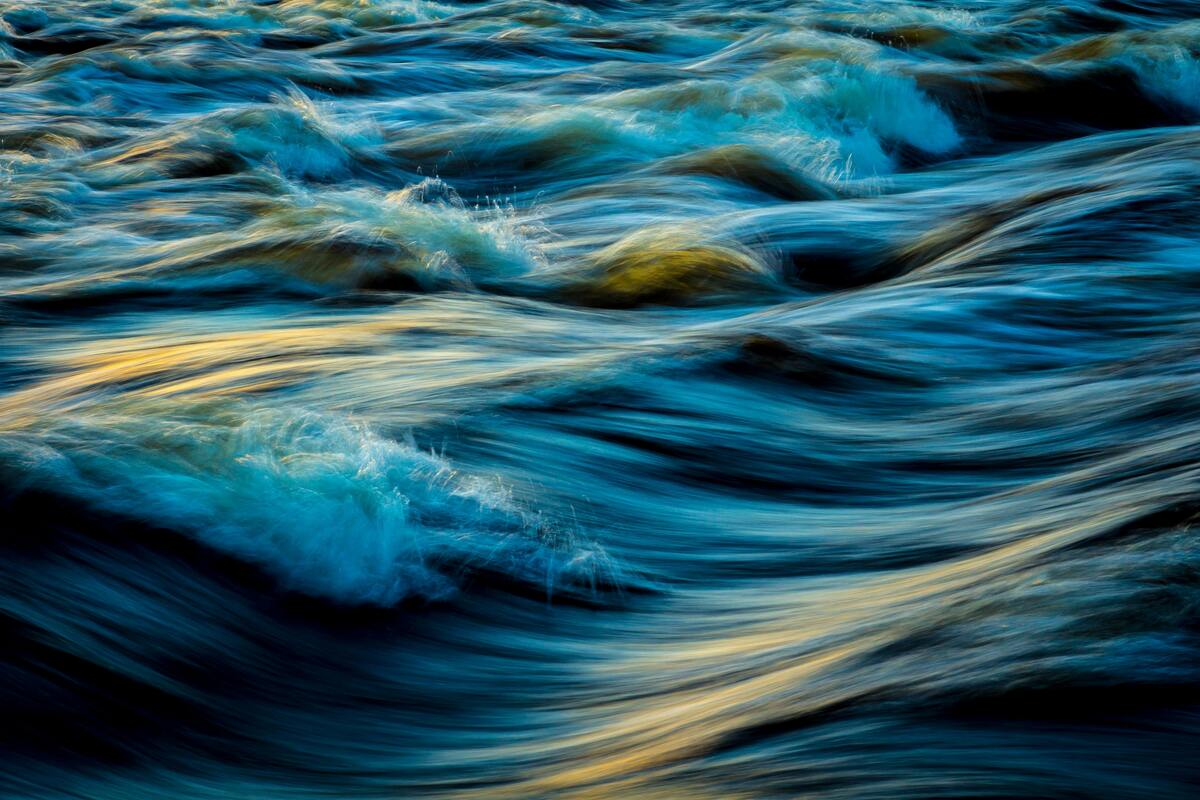
You can know everything about water. You can accurately describe its solid, liquid, and gaseous states; understand its chemical composition and how it reacts with other elements; formulate the most elegant equations about its physical properties. You can turn water into formulas, treatises, perfect laws that surrender to your ingenuity. But what good will all this do you if you refuse to swim?
You can study all the logics in the world, but if you don’t learn to swim, all this knowledge will be useless to you.
You have to learn to swim.
This is, in essence, what happens with a psychedelic experience in a therapeutic context. It is not about understanding it before it happens, nor about being able to explain it accurately afterwards. It is not about accumulating information or adding a new intellectual narrative about oneself. It is about entering.
Like the history teacher, we can read a lot, inform ourselves well, understand the neurobiological mechanisms, the molecules involved, and the possible benefits. In fact, many people come to the consultation with a very high level of insight into what is happening to them. All of this is important. But there comes a point where language runs out. And that is when the body, emotion, and direct experience take over.
It is one thing to understand intellectually that forgiveness can alleviate suffering or that acceptance is a path; it is quite another to feel it in your own skin. Because, once you have experienced this, it often becomes easier to introduce small changes in your daily life that reinforce what you have learned.
We can imagine psychedelic-assisted psychotherapy as learning to swim. Not in the middle of the ocean, or in the middle of a storm, but in a wave pool: with pool floats, knowing that the experience has a beginning and an end, and with a professional by your side at all times.
Psychedelic-assisted psychotherapy is not about learning a new “logy,” but about living an experience that, when well accompanied and integrated, can open up new ways of relating to oneself, to others, and to suffering. It does not promise magical solutions or easy paths. But it does offer a clear opportunity: to stop talking about water and finally learn to swim.
Text written by Joan Soler, intern from the Master’s programme “General Sanitario” in 2026. Based on a fable by the great Persian poet, Rumi.