Ketamine

Marta Martín Islas

Ketamine for anxiety: a simple guide to new findings

Anxiety disorders are increasingly prevalent and often respond poorly to standard treatments such as SSRIs or benzodiazepines. Growing evidence suggests ketamine-assisted psychotherapy may offer rapid relief, particularly in treatment-resistant anxiety. By modulating glutamate via NMDA and AMPA receptors, ketamine enhances neuroplasticity and may reduce pathological worry within hours or days. Clinical trials show benefits in social and generalized anxiety, and real-world studies report sustained symptom reduction and decreased suicidal ideation. When combined with psychotherapy and integration, ketamine may help consolidate meaningful and lasting change.

...
Marta Martín Islas

Comparing intravenous vs. intramuscular ketamine therapy

Ketamine therapy can be delivered intravenously or intramuscularly, each offering distinct therapeutic experiences. IV administration provides gradual delivery, precise titration and close monitoring, often preferred in acute settings. IM administration offers rapid onset, high bioavailability and a more immersive experience, with simpler logistics and greater comfort for many patients. Research shows both routes are similarly safe and effective for depression, anxiety, PTSD and pain, especially when combined with psychotherapy and structured integration. Patient preference, clinical goals and context should guide route selection.

...
Debora Gonzalez

Neuroplasticity and ketamine: a new horizon in mental health

Depression, anxiety and chronic stress are associated with the loss and retraction of dendritic spines, disrupting communication between key brain regions involved in emotion, memory and decision-making. This disconnection reduces cognitive flexibility and promotes rumination and rigid negative patterns. Ketamine and other psychedelics have been shown to rapidly enhance neuroplasticity by increasing the formation and stabilization of dendritic spines, reopening critical learning periods. When combined with psychotherapy and supportive habits, this window of plasticity can facilitate lasting emotional and behavioral change.

...
Debora Gonzalez

Ketamine for Treatment Resistant Depression: Real World Evidence

Treatment-resistant depression affects up to one third of patients with major depressive disorder and is linked to severe impairment and suicide risk. Real-world clinical data show that ketamine offers rapid antidepressant effects, with meaningful symptom reduction in nearly half of treated patients and remission in around one third. Benefits often appear within hours or days and can be maintained over time with follow-up treatment. Evidence also indicates good tolerability, low risk of symptom worsening and effectiveness in both unipolar and bipolar depression.

...
Òscar Parés Franquero

Are S-Ketamine (Esketamine) and R-Ketamine the same?

This article explains the key differences and similarities between ketamine and esketamine in the treatment of resistant depression. It reviews their shared glutamatergic mechanisms, distinct stereoisomeric forms, routes of administration and side effect profiles. Evidence from preclinical and clinical studies suggests racemic ketamine and R-ketamine may offer longer lasting antidepressant effects and fewer adverse reactions than S-ketamine. The text also addresses subjective experiences, dissociative effects, cost, regulatory issues and why many clinics prioritize racemic ketamine in personalized, evidence based care.

...
Òscar Parés Franquero

Ketamine assisted therapy training – second edition

Following the success of the first edition, this second Ketamine-Assisted Psychotherapy training expands theoretical and experiential learning for health professionals. Level 1 in Barcelona offers five days covering neuroscience, clinical applications, preparation, integration and best practice. Level 2 adds an immersive experiential retreat in Montnegre Natural Park, inspired by long-running US programs. Led by international experts, the training equips participants with practical, ethical and clinical tools to personalize treatments, enhance safety and deepen therapeutic effectiveness in mental health and chronic pain settings worldwide today contexts.

...
Speakers for psychedelic-assisted therapy training 2025.
Marta Martín Islas

Meet the speakers of the training on ketamine-assisted psychotherapy in Barcelona

Aquest article presenta els ponents de la formació en Psicoteràpia Assistida amb Ketamina que tindrà lloc a Barcelona el 2025. El programa reuneix professionals de referència internacional en psiquiatria, psicologia, neurociència i teràpies psicodèliques. Els formadors aporten dècades d’experiència clínica, recerca científica i desenvolupament de models terapèutics innovadors. Conèixer els seus perfils permet entendre la solidesa acadèmica, clínica i humana de la formació, així com la diversitat d’enfocaments que conflueixen en aquesta proposta educativa única.

...
Marta Martín Islas

Ketamine vs. psilocybin therapy: a comparative overview

This article compares ketamine and psilocybin-assisted therapies, outlining differences in legality, mechanisms of action, therapeutic uses, safety profiles and patient experience. Ketamine is legally available and offers rapid symptom relief through glutamatergic modulation, making it useful in acute depression and suicidality. Psilocybin, currently illegal outside trials in Spain, acts via serotonin receptors and is associated with longer-lasting psychological change. The article highlights clinical considerations to help patients and professionals choose the most appropriate treatment based on current research and clinical practice.

...
Ketamine use guidelines by KRF authors
José Carlos Bouso

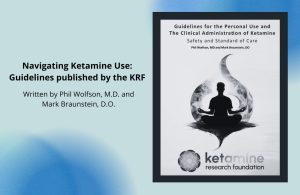
Guidelines for ketamine safety and clinical use: Ketamine Research Foundation recommendations

The Ketamine Research Foundation, led by Dr. Phil Wolfson, has published a comprehensive guide for the safe and ethical use of ketamine. The document addresses responsible personal use, clinical application within ketamine-assisted psychotherapy, and a professional ethical code developed by the Ketamine Psychotherapy Associates. It offers practical guidance for preparation, accompaniment, and integration, aiming to minimize risks and maximize therapeutic benefit. The guide reinforces KRF’s leadership in setting high ethical, clinical, and educational standards for ketamine-assisted therapy worldwide.

...
Debora Gonzalez

Ketamine-assisted therapy in the treatment of grief for the loss of a loved one

Prolonged or complicated grief affects around 10% of bereaved people and is marked by persistent longing, intense emotional distress, and functional impairment. Current evidence shows only moderate benefits from psychotherapy and no proven efficacy of medication alone. Recent research highlights psychedelic-assisted therapies as promising alternatives. Ketamine-assisted therapy may support grief treatment through two complementary mechanisms: a neurobiological window of enhanced neuroplasticity that increases psychological flexibility, and meaningful altered-state experiences that facilitate acceptance, emotional processing, and the reconstruction of personal narratives around loss.

...
Marta Martín Islas

Ketamine for chronic neuropathic pain

Chronic neuropathic pain is often severe, persistent, and poorly responsive to conventional treatments such as anti-inflammatories or opioids. Ketamine has emerged as a promising option by modulating NMDA receptors involved in pain perception and memory. Clinical studies show that ketamine can significantly reduce pain for weeks, particularly in complex neuropathic conditions. Beyond analgesia, ketamine may also improve comorbid depression and PTSD, which frequently accompany chronic pain. When combined with psychotherapy, ketamine offers an integrative approach addressing both physical suffering and psychological distress.

...
Òscar Parés Franquero

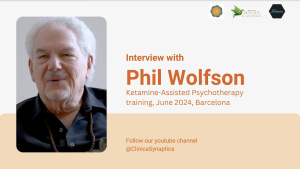
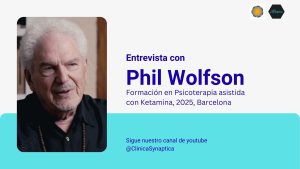
Interview with Phil Wolfson, creator of Ketamine-Assisted Psychotherapy

Phil Wolfson, creator of Ketamine-Assisted Psychotherapy (KAP) and director of the Ketamine Research Foundation, shares an in-depth reflection on his life, clinical work, and the future of psychedelic medicine. In this interview, recorded during the 2024 KAP training in Barcelona, Wolfson discusses ketamine’s unique therapeutic flexibility, the risks of over-medicalization, and the importance of integrating psychotherapy with psychedelic treatments. He also offers a critical perspective on regulation, corporatization, and access in Europe.

...
Marta Martín Islas

When nothing else works: Ketamine for treatment-resistant depression

Treatment-resistant depression occurs when major depressive disorder does not respond to at least two adequate treatments, leading to prolonged suffering and functional impairment. Many patients fail to achieve full remission, despite multiple medication trials, increasing the risk of chronicity and hospitalization. Recent clinical evidence shows ketamine can produce rapid and meaningful symptom reduction in this population, including decreases in suicidal ideation and anxiety. Ongoing and maintenance ketamine sessions may further improve outcomes, offering new hope for patients who have not benefited from conventional antidepressant therapies

...
Òscar Parés Franquero

Ketamine for suicide prevention

Suicidal ideation represents a major public health concern and requires rapid, effective intervention. Conventional treatments such as antidepressants and psychotherapy often act too slowly for high-risk patients. Recent clinical evidence shows that ketamine can significantly reduce suicidal ideation within hours or days, particularly in individuals with bipolar disorder. Randomized controlled studies demonstrate higher remission rates compared to placebo, without worsening symptoms. Although further long-term research is needed, ketamine emerges as a valuable tool for suicide prevention in acute and high-risk clinical situations.

...
Marta Martín Islas

Ketamine in therapy: how does it work?

Ketamine is a dissociative anesthetic synthesized in 1962 that has become a key compound in modern mental health research. Acting primarily as a non-competitive NMDA receptor antagonist, ketamine increases glutamate signaling, promotes synaptogenesis, and enhances neuroplasticity. It also interacts with opioid, serotonergic, muscarinic, and adrenergic receptors, and increases BDNF expression. These combined mechanisms help explain its rapid antidepressant effects, while ongoing research continues to clarify why some patients respond and others do not, and how dosage and context influence therapeutic outcomes.

...
José Carlos Bouso

Ketamine-assisted psychotherapy for post traumatic stress disorder

Posttraumatic stress disorder (PTSD) involves intrusive memories, hyperarousal, dissociation, avoidance, and high comorbidity with depression, anxiety, and substance use. Standard treatments combine psychotherapy and antidepressants, yet remission rates remain low. Ketamine-assisted psychotherapy is emerging as a promising adjunct, targeting glutamatergic dysfunction, enhancing neural connectivity, and enabling therapeutic processing of traumatic memories from altered states of consciousness. Clinical studies show rapid symptom reduction after ketamine infusions, though effects may be transient and protocols require optimization. Careful screening is essential, as recent trauma may represent a contraindication.

...
Marta Martín Islas

Ketamine and depression: the first days of treatment

Depression is a complex disorder affecting mood, cognition, and physical health, and is the leading cause of disability worldwide. Standard treatment combines antidepressant medication and psychotherapy, yet around one third of patients do not respond adequately. This has driven interest in alternatives such as ketamine, a dissociative anesthetic with rapid antidepressant effects. Clinical trials and meta-analyses show symptom improvement within hours and remission in some patients. Ketamine is generally well tolerated and most effective when combined with psychotherapeutic support and careful medical supervision.

...
Òscar Parés Franquero

Presentation on ketamine therapy at the Congress of Dual Pathology 2023

During the Spanish Society of Dual Pathology Congress in Seville, the “Psychedelic Track” highlighted emerging therapeutic uses of psychedelics in mental health. Three presentations by Joan Obiols, Medical Director of Clínica Synaptica, explored harm reduction through Kosmicare, the history of psychedelics in Spain, and the clinical foundations of ketamine-assisted psychotherapy. The sessions presented preliminary clinical results and generated strong professional interest and debate.

...
Òscar Parés Franquero

Building new paradigms in mental health: The practice of Ketamine-assisted psychotherapy

The “Talk Openly about Mental Health” project brings mental health conversations into the public space of Gràcia, Barcelona, giving voice to lived experiences and professional perspectives. In the edition focused on mental health and drugs, Estefanía Moreno represented Clínica Synaptica with a talk on ketamine-assisted psychotherapy. The event combined clinical insights, community dialogue, and artistic expression, fostering openness, reflection, and a shared commitment to reducing stigma around mental health.

...

The information on this website is intended for healthcare professionals authorized to prescribe or dispense medications who practice their profession in Spain. Therefore, specialized training is required to interpret it correctly. The mentioned product may have a different authorized data sheet in other countries. By clicking the “Accept” button, you confirm that you are a healthcare professional authorized to prescribe or dispense medications and that you wish to access the information on this website in that capacity.