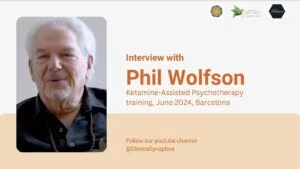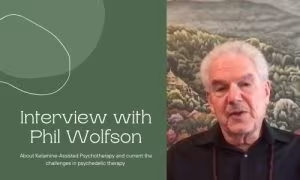

Phil Wolfson: an in-depth interview
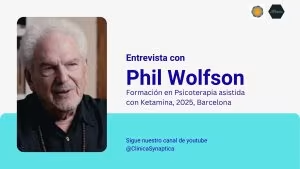
In this engaging interview conducted by Dr. Joan Obiols, Phil Wolfson, founder of the Ketamine Research Foundation, speaks passionately about the pivotal events in his life and what led him to become a world-renowned expert in ketamine-assisted psychotherapy.

Comparing intravenous vs. intramuscular ketamine therapy
Ketamine therapy can be delivered intravenously or intramuscularly, each offering distinct therapeutic experiences. IV administration provides gradual delivery, precise titration and close monitoring, often preferred in acute settings. IM administration offers rapid onset, high bioavailability and a more immersive experience, with simpler logistics and greater comfort for many patients. Research shows both routes are similarly safe and effective for depression, anxiety, PTSD and pain, especially when combined with psychotherapy and structured integration. Patient preference, clinical goals and context should guide route selection.

Ketamine for Treatment Resistant Depression: Real World Evidence
Treatment-resistant depression affects up to one third of patients with major depressive disorder and is linked to severe impairment and suicide risk. Real-world clinical data show that ketamine offers rapid antidepressant effects, with meaningful symptom reduction in nearly half of treated patients and remission in around one third. Benefits often appear within hours or days and can be maintained over time with follow-up treatment. Evidence also indicates good tolerability, low risk of symptom worsening and effectiveness in both unipolar and bipolar depression.

Ketamine assisted therapy training – second edition
Following the success of the first edition, this second Ketamine-Assisted Psychotherapy training expands theoretical and experiential learning for health professionals. Level 1 in Barcelona offers five days covering neuroscience, clinical applications, preparation, integration and best practice. Level 2 adds an immersive experiential retreat in Montnegre Natural Park, inspired by long-running US programs. Led by international experts, the training equips participants with practical, ethical and clinical tools to personalize treatments, enhance safety and deepen therapeutic effectiveness in mental health and chronic pain settings worldwide today contexts.

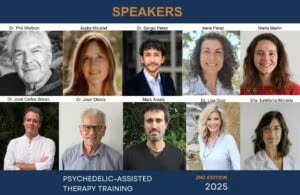
Meet the speakers of the training on ketamine-assisted psychotherapy in Barcelona
Aquest article presenta els ponents de la formació en Psicoteràpia Assistida amb Ketamina que tindrà lloc a Barcelona el 2025. El programa reuneix professionals de referència internacional en psiquiatria, psicologia, neurociència i teràpies psicodèliques. Els formadors aporten dècades d’experiència clínica, recerca científica i desenvolupament de models terapèutics innovadors. Conèixer els seus perfils permet entendre la solidesa acadèmica, clínica i humana de la formació, així com la diversitat d’enfocaments que conflueixen en aquesta proposta educativa única.

Guidelines for ketamine safety and clinical use: Ketamine Research Foundation recommendations
The Ketamine Research Foundation, led by Dr. Phil Wolfson, has published a comprehensive guide for the safe and ethical use of ketamine. The document addresses responsible personal use, clinical application within ketamine-assisted psychotherapy, and a professional ethical code developed by the Ketamine Psychotherapy Associates. It offers practical guidance for preparation, accompaniment, and integration, aiming to minimize risks and maximize therapeutic benefit. The guide reinforces KRF’s leadership in setting high ethical, clinical, and educational standards for ketamine-assisted therapy worldwide.

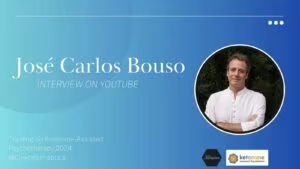
Interview with José Carlos Bouso
José Carlos Bouso, psychologist and PhD in Pharmacology, reflects on the present and future of psychedelic therapy in an interview recorded during a ketamine-assisted psychotherapy training in Barcelona. He reviews the historical importance of psychedelic research in psychiatry, addresses current regulatory and sociopolitical challenges, and discusses the influence of the pharmaceutical industry. Bouso also highlights his long-standing interest in schizophrenia and its potential responsiveness to psychedelic-assisted approaches, expressing strong optimism that we are entering a uniquely promising era for psychedelic medicine.

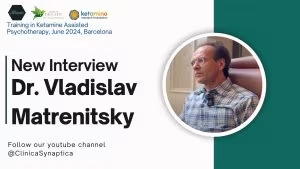
New interview with Dr. Vladislav Matrenitsky, kyiv, Ukraine
During our recent Ketamine-Assisted Psychotherapy training, we had the privilege of welcoming Vladislav Matrenitsky, founder of Expio Clinic in Kyiv. A medical doctor and transpersonal psychotherapist, Dr. Matrenitsky integrates psychedelic medicine with non-Western traditions such as Qigong and Sufism. Since 2018, he has worked therapeutically with ketamine, with a special focus on soldiers suffering from PTSD, contributing both to clinical care and to the growing body of research on ketamine-assisted therapy.

Phil Wolfson: ketamine, consciousness and emotional healing
Phil Wolfson, creator of Ketamine-Assisted Psychotherapy (KAP) and director of the Ketamine Research Foundation, shares an in-depth reflection on his life, clinical work, and the future of psychedelic medicine. In this interview, recorded during the 2024 KAP training in Barcelona, Wolfson discusses ketamine’s unique therapeutic flexibility, the risks of over-medicalization, and the importance of integrating psychotherapy with psychedelic treatments. He also offers a critical perspective on regulation, corporatization, and access in Europe.

Interview with Phil Wolfson
Phil Wolfson, creator of Ketamine-Assisted Psychotherapy (KAP) and director of the Ketamine Research Foundation, shares his vision on the future of psychedelic psychotherapy in this in-depth interview. Drawing from decades of clinical practice and research, he reflects on ketamine’s unique therapeutic flexibility, the risks of over-regulation and corporatization, and the importance of preserving the psychedelic experience within clinical care. Wolfson also discusses training, ethics, accessibility, and why ketamine currently plays a central role in advancing mental health treatment worldwide.