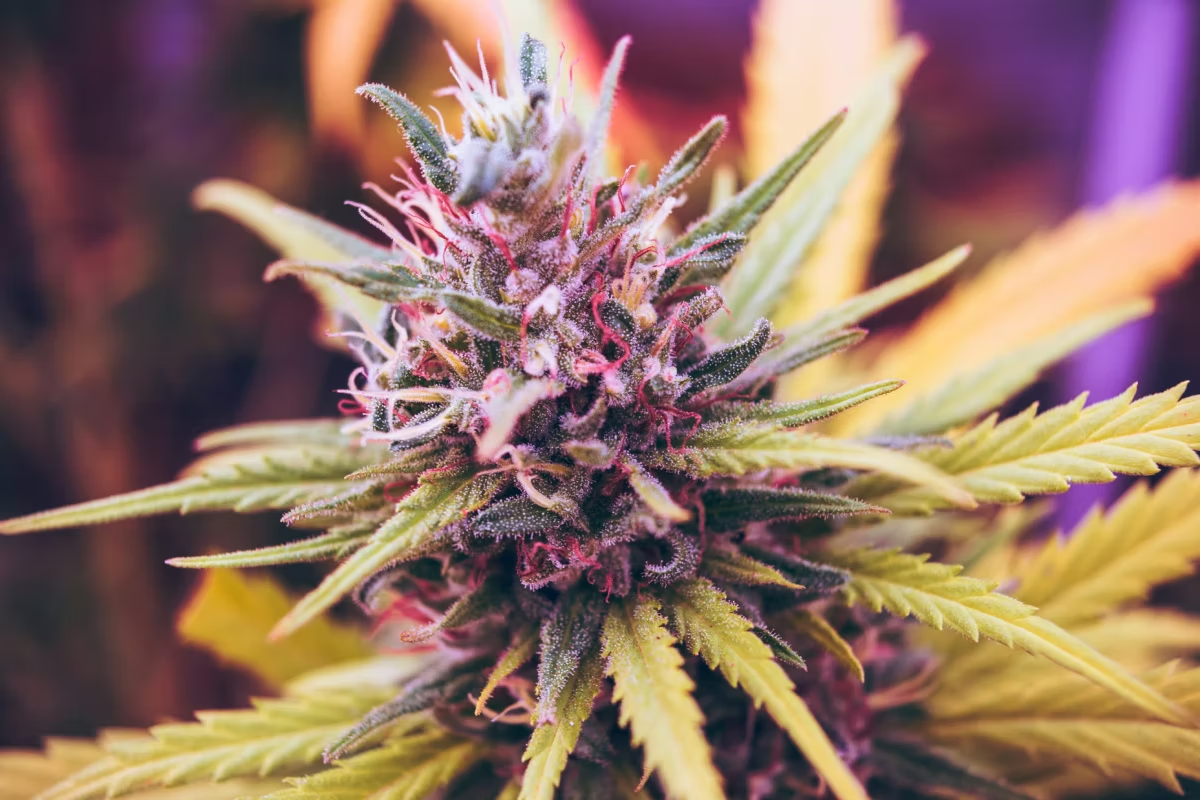

Over the past few decades, interest in medical cannabis has grown exponentially, driven by advances in scientific research and a better understanding of the endocannabinoid system, a natural mechanism present in our body that participates in the regulation of numerous physical and emotional functions.
Far from the myths and stigma that have historically surrounded this plant, we now know that certain cannabinoids can have relevant therapeutic applications when used under medical supervision and as part of an individualized treatment.
What is medical cannabis?
The cannabis plant contains more than 500 active compounds, around 120 of which are known as phytocannabinoids. Among these, the most studied are tetrahydrocannabinol (THC) and cannabidiol (CBD).
THC is the plant’s main psychotropic component and also has analgesic, antiemetic, and muscle-relaxant properties. CBD, on the other hand, does not produce effects that alter perception or state of consciousness, and has attracted great interest for its potential anxiolytic, anti-inflammatory, anticonvulsant, and nervous-system-modulating properties.
Medical cannabis refers to the therapeutic use of these compounds through standardized formulations, with carefully adjusted doses and always under the supervision of healthcare professionals.
The endocannabinoid system: a key piece of the body’s balance
Our body has its own system called the endocannabinoid system, made up of receptors, naturally produced ligands or endocannabinoids, and enzymes responsible for their synthesis and breakdown.
Its main function is to help maintain homeostasis, that is, the body’s internal balance.
This system is involved in processes as diverse as:
● Pain perception.
● Mood regulation.
● Stress response.
● Sleep.
● Appetite.
● Memory and learning.
● Immune function.
Cannabinoids derived from the plant can interact with this system and modulate its activity, supporting better regulation of certain functions when these are disrupted.
Therapeutic applications
Medical cannabis is currently used as part of the therapeutic approach for different conditions, particularly in patients with chronic pain, neuropathic pain, spasticity associated with neurological diseases, some forms of epilepsy resistant to conventional treatment, and nausea or vomiting related to certain cancer treatments.
Research continues to advance, and there is growing interest in exploring its usefulness in other areas of medicine, including mental health.
What role can it play in psychiatry?
The endocannabinoid system plays an important role in regulating the response to and management of anxiety, fear, emotional memory, adaptation to acute and chronic stress, and emotional processing.
For this reason, various research groups have studied the therapeutic potential of cannabinoids in a range of psychiatric conditions.
In clinical practice, some patients may benefit from cannabinoid-based treatments as part of a comprehensive therapeutic plan to address symptoms such as:
● Persistent anxiety.
● Sleep disturbances.
● Chronic stress.
● Certain symptoms related to post-traumatic stress disorder.
● Chronic pain accompanied by emotional impact.
● Psychological distress associated with complex medical conditions.
There is also growing interest in investigating its potential usefulness as a complement to other interventions in carefully selected patients.
It is important to note that medical cannabis is not a universal solution, nor is it suitable for everyone. Its use requires an individualized assessment, taking into account the patient’s clinical history, personal and family background, concurrent treatments, and risk profile.
Personalized medicine: the right treatment for each person
One of the fundamental principles of modern medicine is that not all patients respond the same way to the same treatment.
In the case of medical cannabis, the choice of product type, which cannabinoid or cannabinoids, the THC-to-CBD ratio, the route of administration, and the dose are all adjusted individually for each clinical situation.
This approach makes it possible to optimize therapeutic benefits and minimize the occurrence of adverse effects, always through ongoing medical follow-up.
One more tool within a comprehensive treatment
In mental health, medical cannabis is not intended to replace psychotherapy or conventional pharmacological treatments when these are indicated. On the contrary, it can form part of a broader therapeutic strategy focused on improving quality of life, reducing suffering, and promoting the patient’s overall wellbeing.
At Clínica Synaptica, we understand medical cannabis as a tool grounded in the available scientific evidence and in personalized medicine. That is why every treatment begins with a thorough evaluation and an individualized plan, tailored to each person’s needs, goals, and characteristics.
The therapeutic goal is not simply to treat a diagnosis, but to support the patient through a comprehensive approach that takes into account their history, symptoms, and quality of life.