

Understanding MDMA-Assisted Psychotherapy
MDMA, first synthesized in 1912, has moved from recreational use to becoming the focus of growing scientific interest for its therapeutic potential. Discover how it works, its role in PTSD treatment, and what other clinical applications are currently being explored.
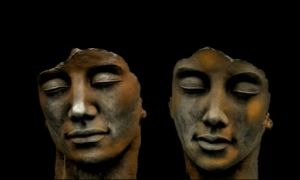
Rewiring the Soul: 5 Surprising Ways Psychedelics Reshape Who We Are
For centuries we believed personality was fixed, carved in stone by adulthood. A new systematic review — analyzing 48 studies on psilocybin, LSD, and ayahuasca — suggests otherwise: our deepest traits, from Openness to Neuroticism, may be far more malleable than we thought. We explore five key findings from psychedelic science and the philosophical questions they raise about the “self.”

Fear, trauma and MDMA
Fear is a fundamental emotion that protects us, but when it becomes chronic it can lead to disorders such as phobias and post-traumatic stress disorder (PTSD). Conventional treatments often show limited efficacy, prompting new approaches like MDMA-assisted psychotherapy. Research promoted by Multidisciplinary Association for Psychedelic Studies (MAPS) and led by figures such as Rick Doblin suggests that MDMA can reduce fear responses, enhance emotional processing, and strengthen the therapeutic alliance. These effects may allow patients to revisit traumatic memories with less avoidance, fostering recovery and improved quality of life.